01 / Product classification
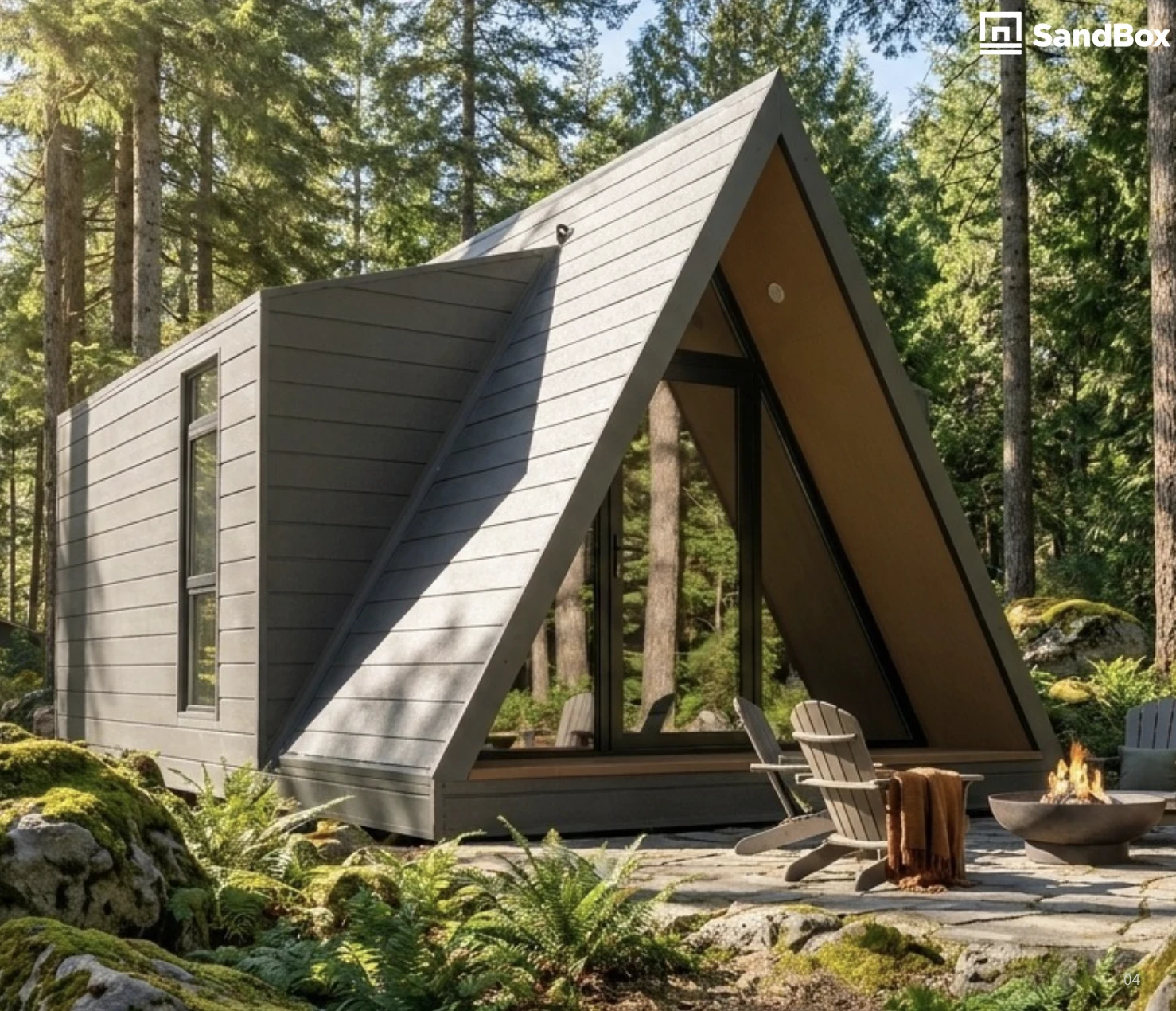
A recreational vehicle with a cabin-like living space.
A park model RV is a preassembled living unit designed for temporary recreational, camping, or seasonal stays. It is built on a single chassis, mounted on wheels, and certified by the manufacturer to ANSI A119.5. Its classification differs from traditional modular or manufactured housing.
ANSI A119.5 is the standard; RVIA is the industry association whose member program includes factory audits. An RVIA seal communicates the manufacturer’s certification under that program. RVIA definition and standards.
02 / How it compares
Similar spaces. Different classifications.
The code, intended use, chassis, and installation requirements matter more than whether a unit looks like a cabin or a house.
| Type | Code / standard | Construction & use | What to consider |
|---|---|---|---|
| Park model RV | ANSI A119.5 | Single chassis; designed for recreational or seasonal stays. | Up to 400 sq ft of gross trailer area in setup mode. Local siting and occupancy rules still apply. |
| Manufactured home | Federal HUD Code | Built on a permanent chassis; intended for residential use. | A different housing category, with its own installation requirements; not subject to the park model’s 400 sq ft cap. |
| Modular home | Applicable state and local building codes | Factory-built sections assembled on a permanent foundation. | Residential building approvals and inspections apply. Site work remains part of the project. |
| Site-built construction | Applicable state and local building codes | Constructed at the property on an approved foundation. | Design, permitting, trades, and construction are coordinated at the site. |
Delivery time and the approval process depend on the design, supplier, location, and site readiness. A park model RV may follow a different regulatory path, but its classification does not guarantee faster approvals or an exemption from zoning, permitting, or property tax.
What about wheels and foundations?
RVIA’s definition includes a chassis and wheels. Delivery equipment, concealed running gear, and the final installation are separate considerations. Before changing or removing running gear, or choosing pads, piers, or a foundation, confirm the unit’s certification and the installation accepted by the local authority. A transportable cabin is not automatically a park model RV.
03 / Site preparation & setup
Plan the arrival before dispatch.
Delivery planning starts with the unit’s dimensions and weight, the transport vehicle, and access to the property. The final support and utility plans should be coordinated before the delivery date.
Rolled into position
Review road bearing capacity, turning space, slopes, gates, trees, and overhead obstructions. The guide’s 14–16 ft access width and roughly 15 ft overhead clearance are preliminary examples—not a clearance specification for every unit. The carrier must confirm the route for the actual load.
Lifted into position
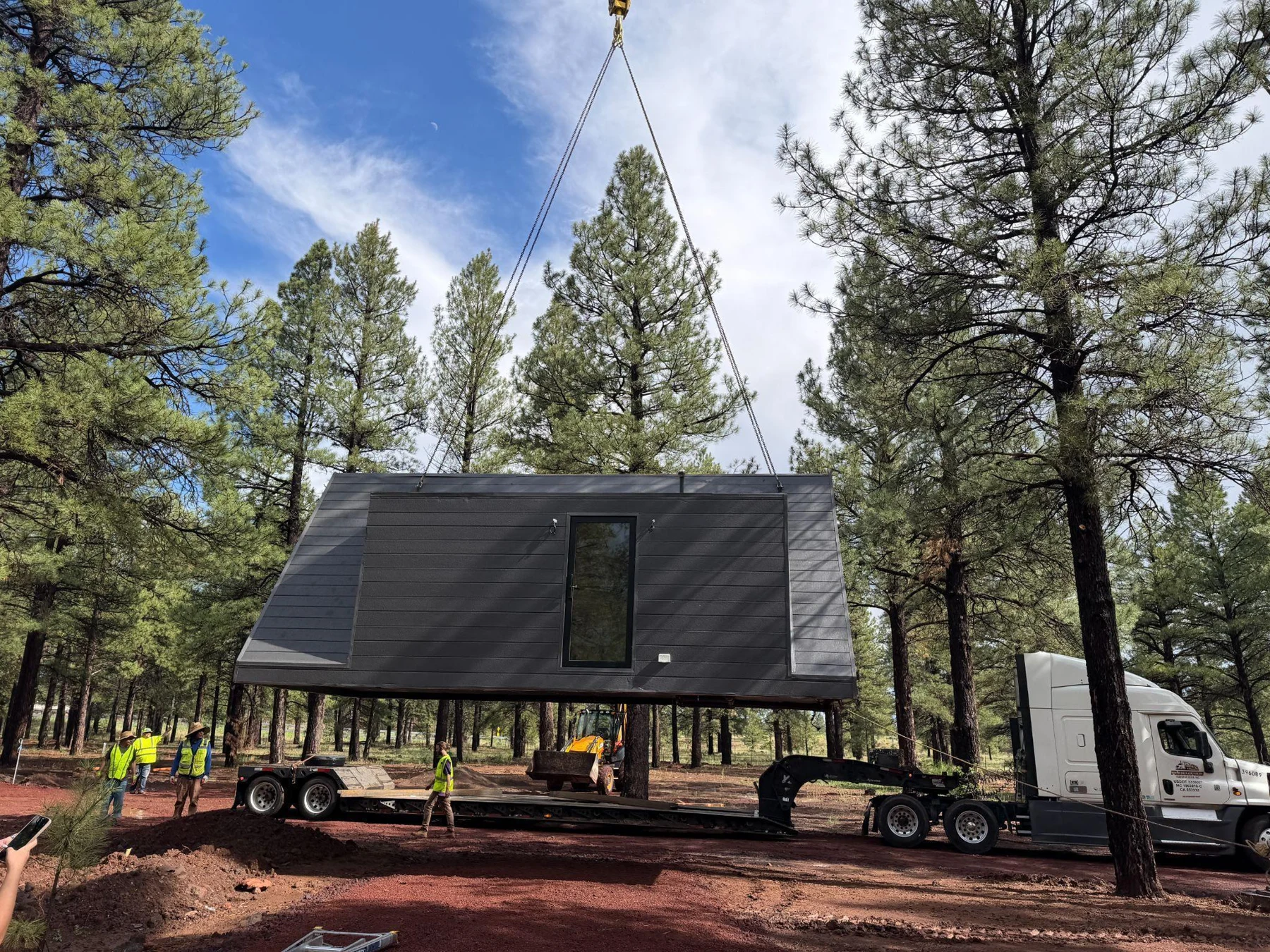
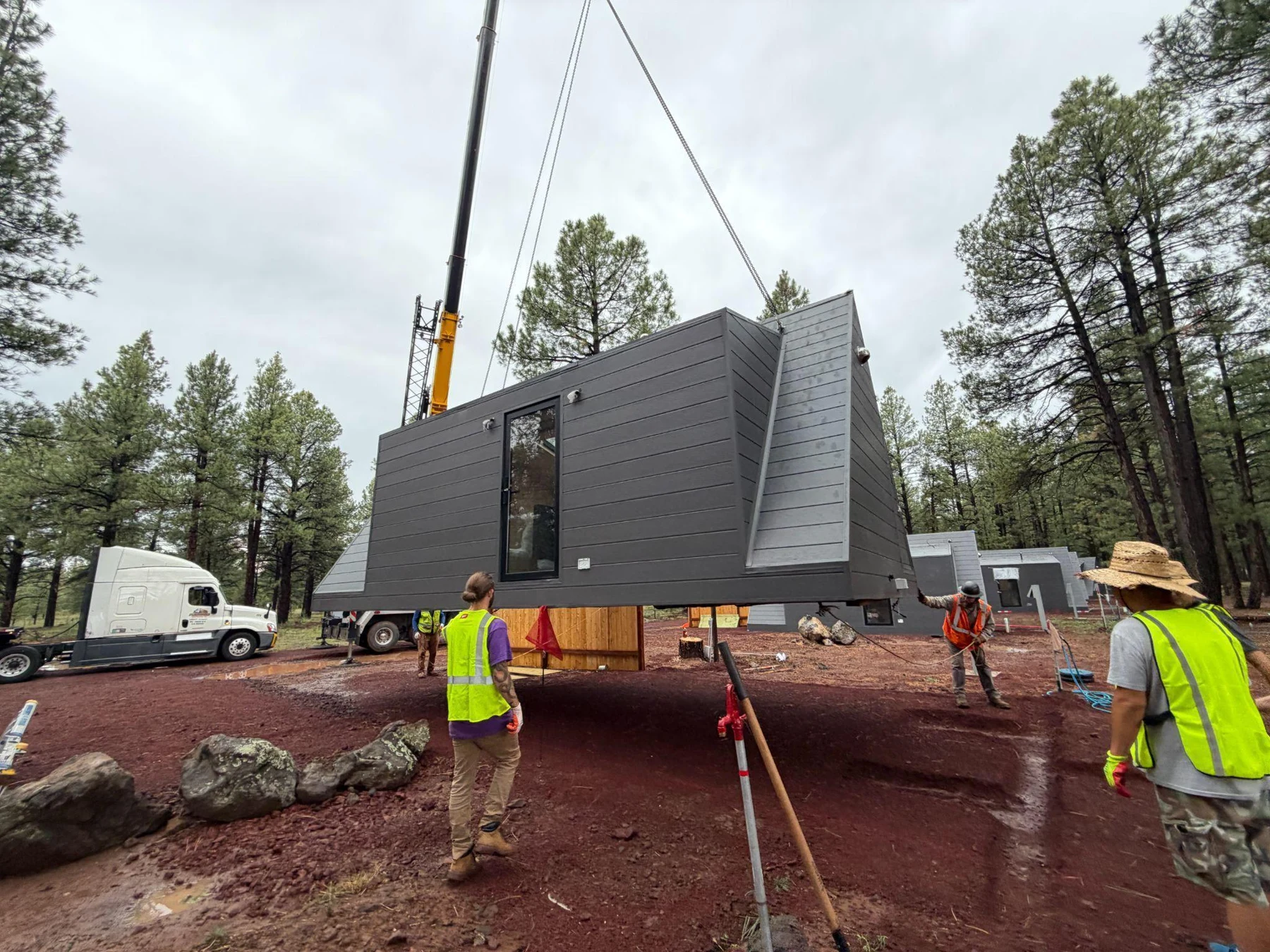
A crane plan considers unit weight, lifting points, working radius, ground capacity, outriggers, and overhead hazards. A qualified crane provider determines the equipment and lift requirements for the location.
Support and utility connections
The guide lists the following example configurations. Use the specific unit’s approved drawings and connection schedule for final design.
- Electrical
- 30-amp or 50-amp service, depending on the unit. Confirm voltage, connection type, and circuit requirements.
- Water
- A 3/4-inch hose-thread connection is one example. Confirm inlet type, pressure, and any freeze protection.
- Wastewater
- A 3-inch connection is listed in the guide. The site needs an approved sewer, septic, or holding-tank arrangement.
- Pad & support
- Confirm support points, ground conditions, drainage, anchorage, leveling, and installation requirements for the unit and location.
Delivery is one milestone; readiness for guests also depends on completed site work, connections, inspections, and operating approvals. Property owners and their local contractors should plan those activities alongside the delivery schedule.
04 / Common questions
What owners and operators ask.
Can guests stay throughout the year?
Climate performance and permitted occupancy are different questions. Insulation, heating, cooling, and freeze protection determine suitability for the conditions. Local rules determine allowable use and stay duration; comfort features do not authorize permanent residential occupancy.
Do I need permits or pay property tax?
Do not assume an exemption. Confirm land use, placement, utilities, operating permits, and tax treatment with the relevant local departments before committing to a site plan.
How long does delivery take?
The guide gives SandBox’s target as 12–16 weeks for build and shipping, subject to the agreed scope and schedule. This is a delivery target, not a promise that the property will be ready to accept guests within that period.
Can the layout and finishes change?
Customization depends on the supplier, quantity, and product. The guide describes build-to-order SandBox projects of ten or more units, including layouts, fixtures, and exterior finishes. Confirm available options and minimum quantities for the specific project.
Are off-grid configurations possible?
The guide identifies them as an option for selected projects. Power demand, water supply, wastewater handling, climate, and local approvals need to be resolved as part of the design.
05 / Tax treatment & financing
Understand the financial assumptions.
Depreciation
Depreciation lets a business recover the cost of eligible assets over time. Section 179 and bonus depreciation can accelerate deductions for qualifying property, but a park model RV label alone does not establish eligibility.
Asset classification, business and personal use, placed-in-service timing, rental arrangements, and applicable limits affect the result. Ask a tax adviser to assess the purchase before including a first-year deduction in the project budget. A deduction reduces taxable income; it is not a dollar-for-dollar refund. IRS Publication 946.
Financing
Financing depends on the lender, buyer, collateral, and project. Compare the down payment, interest rate, repayment term, fees, guarantees, and any balloon payment. Confirm whether the financing covers only the units or also transport and site costs.
The guide notes that lender introductions may be available through SandBox. Approval and terms are determined by the lender.
Adapted from the SandBox Park Model RV Guide, September 2026. General planning information; final requirements depend on the unit, location, and intended use.